
Based on my computer vision knowledge, I know that data augmentation usually improves the performance of neural networks. \nThus, by extension, I guess that it is possible to apply this technique to graphical neural networks. \nHas anyone tried this technique on this competition or something similar?
", "messages": [ { "id": "591905", "postDate": "08/04/2019 13:01:51", "content": "Based on my computer vision knowledge, I know that data augmentation usually improves the performance of neural networks. \nThus, by extension, I guess that it is possible to apply this technique to graphical neural networks. \nHas anyone tried this technique on this competition or something similar?
", "rawMarkdown": "Based on my computer vision knowledge, I know that data augmentation usually improves the performance of neural networks. \nThus, by extension, I guess that it is possible to apply this technique to graphical neural networks. \nHas anyone tried this technique on this competition or something similar?", "votes": null }, { "id": "592158", "postDate": "08/04/2019 22:56:16", "content": "Why should it in this case? I think we have plenty of samples and the dimensionality is not that high plus all these models aren't very deep to start with
", "rawMarkdown": "Why should it in this case? I think we have plenty of samples and the dimensionality is not that high plus all these models aren't very deep to start with", "votes": null }, { "id": "592162", "postDate": "08/04/2019 23:19:01", "content": "question is: how would you augment data?
", "rawMarkdown": "question is: how would you augment data?", "votes": null }, { "id": "592188", "postDate": "08/05/2019 01:36:52", "content": "Exactly as CPMP asked, the samples are real life molecules, and you can't augment using artificial molecules. If the features in your generator is translational and rotational invariant, you are good to go.
", "rawMarkdown": "Exactly as CPMP asked, the samples are real life molecules, and you can't augment using artificial molecules. If the features in your generator is translational and rotational invariant, you are good to go.", "votes": null }, { "id": "592200", "postDate": "08/05/2019 02:14:05", "content": "did you mean pseudo labelling using the test set? I don't see how you would augment the dataset.
", "rawMarkdown": "did you mean pseudo labelling using the test set? I don't see how you would augment the dataset.", "votes": null }, { "id": "592258", "postDate": "08/05/2019 04:31:45", "content": "\n\n\nI think we have plenty of samples and the dimensionality is not that high plus all these models aren't very deep to start with
\n
Despite the fact that thats not a reason to not use augmentation, I disagree on all three points 😂
", "rawMarkdown": "> I think we have plenty of samples and the dimensionality is not that high plus all these models aren't very deep to start with\n\nDespite the fact that thats not a reason to not use augmentation, I disagree on all three points 😂", "votes": null }, { "id": "592273", "postDate": "08/05/2019 05:30:15", "content": "Indeed - if the features are rotation invariant no need for data augmentation, otherwise rotating the molecules in the space is a way to do data augmentation in this competition (+ good amount of RAM).
", "rawMarkdown": "Indeed - if the features are rotation invariant no need for data augmentation, otherwise rotating the molecules in the space is a way to do data augmentation in this competition (+ good amount of RAM).", "votes": null }, { "id": "592349", "postDate": "08/05/2019 07:26:04", "content": "Can you expand a bit ? ;)
", "rawMarkdown": "Can you expand a bit ? ;)", "votes": null }, { "id": "592378", "postDate": "08/05/2019 08:03:23", "content": "\n\n\nI think we have plenty of samples
\n
E.g. 40k for 1JHN is not very much if you use NNs
\n\n\n\n\ndimensionality is not that high\n all these models aren't very deep
\n
that strongly depends on what input you use. There exists a various amount of out of the box approaches here. You could for example (and I can not confirm or deny that we are doing something like that) take the following image and process through a resnet-151:
\n\n
Interesting, I did not thought of using a 2D (or 3D) visualization as input. Anyway, I'm quite sure we do rather different things and I am looking for your write up (and all teams who want to share after competition end).
", "rawMarkdown": "Interesting, I did not thought of using a 2D (or 3D) visualization as input. Anyway, I'm quite sure we do rather different things and I am looking for your write up (and all teams who want to share after competition end).", "votes": null }, { "id": "592485", "postDate": "08/05/2019 11:23:13", "content": "Autoencode the molecules--->Obtain the hidden dimension representations--->generate new molecules based on exploring nearby distance in the learned space
", "rawMarkdown": "Autoencode the molecules--->Obtain the hidden dimension representations--->generate new molecules based on exploring nearby distance in the learned space", "votes": null }, { "id": "592486", "postDate": "08/05/2019 11:24:28", "content": "I had stuff like gradient boosting, graph NNs and manifold learning in mind. I agree that if you are going down the hardcore image generation path (really cool btw) sample size might start being a problem
", "rawMarkdown": "I had stuff like gradient boosting, graph NNs and manifold learning in mind. I agree that if you are going down the hardcore image generation path (really cool btw) sample size might start being a problem", "votes": null }, { "id": "592487", "postDate": "08/05/2019 11:25:24", "content": "Although this doesn't address the problem of edge prediction
", "rawMarkdown": "Although this doesn't address the problem of edge prediction", "votes": null }, { "id": "592497", "postDate": "08/05/2019 11:47:32", "content": "more important, it doesn't address the problem of generating correct target values...
", "rawMarkdown": "more important, it doesn't address the problem of generating correct target values...", "votes": null }, { "id": "592499", "postDate": "08/05/2019 11:48:53", "content": "Let's revisit your claims once you have submitted in this competition.
", "rawMarkdown": "Let's revisit your claims once you have submitted in this competition.", "votes": null }, { "id": "592500", "postDate": "08/05/2019 11:49:48", "content": "True, but I think if one assumes we can generate correct molecules then something like Chem analogue of MixUp could (potentially) work
", "rawMarkdown": "True, but I think if one assumes we can generate correct molecules then something like Chem analogue of MixUp could (potentially) work", "votes": null } ], "comments": [ { "id": 592158, "author_name": "george1986", "author_url": "", "post_date": "08/04/2019 22:56:16", "content": "Why should it in this case? I think we have plenty of samples and the dimensionality is not that high plus all these models aren't very deep to start with
", "votes": null, "replies": [ { "id": 592499, "author_name": "cpmpml", "author_url": "", "post_date": "08/05/2019 11:48:53", "content": "Let's revisit your claims once you have submitted in this competition.
", "votes": null, "replies": [] } ] }, { "id": 592162, "author_name": "cpmpml", "author_url": "", "post_date": "08/04/2019 23:19:01", "content": "question is: how would you augment data?
", "votes": null, "replies": [ { "id": 592485, "author_name": "george1986", "author_url": "", "post_date": "08/05/2019 11:23:13", "content": "Autoencode the molecules--->Obtain the hidden dimension representations--->generate new molecules based on exploring nearby distance in the learned space
", "votes": null, "replies": [] }, { "id": 592487, "author_name": "george1986", "author_url": "", "post_date": "08/05/2019 11:25:24", "content": "Although this doesn't address the problem of edge prediction
", "votes": null, "replies": [] }, { "id": 592497, "author_name": "cpmpml", "author_url": "", "post_date": "08/05/2019 11:47:32", "content": "more important, it doesn't address the problem of generating correct target values...
", "votes": null, "replies": [] }, { "id": 592500, "author_name": "george1986", "author_url": "", "post_date": "08/05/2019 11:49:48", "content": "True, but I think if one assumes we can generate correct molecules then something like Chem analogue of MixUp could (potentially) work
", "votes": null, "replies": [] } ] }, { "id": 592188, "author_name": "scaomath", "author_url": "", "post_date": "08/05/2019 01:36:52", "content": "Exactly as CPMP asked, the samples are real life molecules, and you can't augment using artificial molecules. If the features in your generator is translational and rotational invariant, you are good to go.
", "votes": null, "replies": [ { "id": 592273, "author_name": "abrial", "author_url": "", "post_date": "08/05/2019 05:30:15", "content": "Indeed - if the features are rotation invariant no need for data augmentation, otherwise rotating the molecules in the space is a way to do data augmentation in this competition (+ good amount of RAM).
", "votes": null, "replies": [] } ] }, { "id": 592200, "author_name": "chabir", "author_url": "", "post_date": "08/05/2019 02:14:05", "content": "did you mean pseudo labelling using the test set? I don't see how you would augment the dataset.
", "votes": null, "replies": [] }, { "id": 592258, "author_name": "christofhenkel", "author_url": "", "post_date": "08/05/2019 04:31:45", "content": "\n\n\nI think we have plenty of samples and the dimensionality is not that high plus all these models aren't very deep to start with
\n
Despite the fact that thats not a reason to not use augmentation, I disagree on all three points 😂
", "votes": null, "replies": [ { "id": 592349, "author_name": "cpmpml", "author_url": "", "post_date": "08/05/2019 07:26:04", "content": "Can you expand a bit ? ;)
", "votes": null, "replies": [] }, { "id": 592378, "author_name": "christofhenkel", "author_url": "", "post_date": "08/05/2019 08:03:23", "content": "\n\n\nI think we have plenty of samples
\n
E.g. 40k for 1JHN is not very much if you use NNs
\n\n\n\n\ndimensionality is not that high\n all these models aren't very deep
\n
that strongly depends on what input you use. There exists a various amount of out of the box approaches here. You could for example (and I can not confirm or deny that we are doing something like that) take the following image and process through a resnet-151:
\n\n
Interesting, I did not thought of using a 2D (or 3D) visualization as input. Anyway, I'm quite sure we do rather different things and I am looking for your write up (and all teams who want to share after competition end).
", "votes": null, "replies": [] }, { "id": 592486, "author_name": "george1986", "author_url": "", "post_date": "08/05/2019 11:24:28", "content": "I had stuff like gradient boosting, graph NNs and manifold learning in mind. I agree that if you are going down the hardcore image generation path (really cool btw) sample size might start being a problem
", "votes": null, "replies": [] } ] } ], "raw_markdown_by_id": { "591905": "Based on my computer vision knowledge, I know that data augmentation usually improves the performance of neural networks. \nThus, by extension, I guess that it is possible to apply this technique to graphical neural networks. \nHas anyone tried this technique on this competition or something similar?", "592158": "Why should it in this case? I think we have plenty of samples and the dimensionality is not that high plus all these models aren't very deep to start with", "592162": "question is: how would you augment data?", "592188": "Exactly as CPMP asked, the samples are real life molecules, and you can't augment using artificial molecules. If the features in your generator is translational and rotational invariant, you are good to go.", "592200": "did you mean pseudo labelling using the test set? I don't see how you would augment the dataset.", "592258": "> I think we have plenty of samples and the dimensionality is not that high plus all these models aren't very deep to start with\n\nDespite the fact that thats not a reason to not use augmentation, I disagree on all three points 😂", "592273": "Indeed - if the features are rotation invariant no need for data augmentation, otherwise rotating the molecules in the space is a way to do data augmentation in this competition (+ good amount of RAM).", "592349": "Can you expand a bit ? ;)", "592378": "> I think we have plenty of samples\n\nE.g. 40k for 1JHN is not very much if you use NNs\n\n> dimensionality is not that high\n> all these models aren't very deep\n\nthat strongly depends on what input you use. There exists a various amount of out of the box approaches here. You could for example (and I can not confirm or deny that we are doing something like that) take the following image and process through a resnet-151:\n\n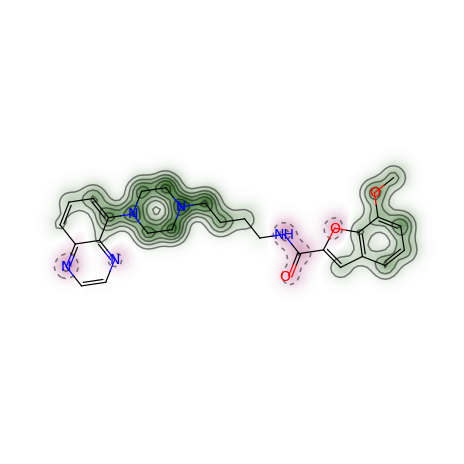", "592428": "Interesting, I did not thought of using a 2D (or 3D) visualization as input. Anyway, I'm quite sure we do rather different things and I am looking for your write up (and all teams who want to share after competition end).", "592485": "Autoencode the molecules--->Obtain the hidden dimension representations--->generate new molecules based on exploring nearby distance in the learned space", "592486": "I had stuff like gradient boosting, graph NNs and manifold learning in mind. I agree that if you are going down the hardcore image generation path (really cool btw) sample size might start being a problem", "592487": "Although this doesn't address the problem of edge prediction", "592497": "more important, it doesn't address the problem of generating correct target values...", "592499": "Let's revisit your claims once you have submitted in this competition.", "592500": "True, but I think if one assumes we can generate correct molecules then something like Chem analogue of MixUp could (potentially) work" }, "source": "meta" }