
Hello community! 😄
\nThis topic is a list of must-see MNIST-like datasets!
\nI know that you are working hard to learn as much as you can on this incredible platform. With this in mind, I want to share some cool MNIST-like datasets that you should give a try in your experiments! 🔥💥
\n
\n\nFashion-MNIST is a dataset of Zalando's article images—consisting of a training set of 60,000 examples and a test set of 10,000 examples. Each example is a 28x28 grayscale image, associated with a label from 10 classes. We intend Fashion-MNIST to serve as a direct drop-in replacement for the original MNIST dataset for benchmarking machine learning algorithms. It shares the same image size and structure of training and testing splits.
\n

\n\nKuzushiji-MNIST is a drop-in replacement for the MNIST dataset (28x28 grayscale, 70,000 images), provided in the original MNIST format as well as a NumPy format. Since MNIST restricts us to 10 classes, we chose one character to represent each of the 10 rows of Hiragana when creating Kuzushiji-MNIST.
\n

\n\nThe EMNIST dataset is a set of handwritten character digits derived from the NIST Special Database 19 and converted to a 28x28 pixel image format and dataset structure that directly matches the MNIST dataset. Further information on the dataset contents and conversion process can be found in the paper available at https://arxiv.org/abs/1702.05373v1.
\n

\n\nThe exact preprocessing steps used to construct the MNIST dataset have long been lost. This leaves us with no reliable way to associate its characters with the ID of the writer and little hope to recover the full MNIST testing set that had 60K images but was never released. The official MNIST testing set only contains 10K randomly sampled images and is often considered too small to provide meaninful confidence intervals. The QMNIST dataset was generated from the original data found in the NIST Special Database 19 with the goal to match the MNIST preprocessing as closely as possible.
\n

\n\nThe Chinese MNIST dataset uses data collected in the frame of a project at Newcastle University. One hundred Chinese nationals took part in data collection. Each participant wrote with a standard black ink pen all 15 numbers in a table with 15 designated regions drawn on a white A4 paper. This process was repeated 10 times with each participant. Each sheet was scanned at the resolution of 300x300 pixels. It resulted a dataset of 15000 images, each representing one character from a set of 15 characters (grouped in samples, grouped in suites, with 10 samples/volunteer and 100 volunteers).
\n

Do not forget to upvote this work if you think that it is worthwhile. This motivates me to do more interesting topics that could make some impact on your knowledge!
\nFeel free to comment if you liked it! Finally, I want to know if you have ever used an MNIST-like dataset like those mentioned above?
\nCredits
\nHello community! 😄
\nThis topic is a list of must-see MNIST-like datasets!
\nI know that you are working hard to learn as much as you can on this incredible platform. With this in mind, I want to share some cool MNIST-like datasets that you should give a try in your experiments! 🔥💥
\n
\n\nFashion-MNIST is a dataset of Zalando's article images—consisting of a training set of 60,000 examples and a test set of 10,000 examples. Each example is a 28x28 grayscale image, associated with a label from 10 classes. We intend Fashion-MNIST to serve as a direct drop-in replacement for the original MNIST dataset for benchmarking machine learning algorithms. It shares the same image size and structure of training and testing splits.
\n
\n\nKuzushiji-MNIST is a drop-in replacement for the MNIST dataset (28x28 grayscale, 70,000 images), provided in the original MNIST format as well as a NumPy format. Since MNIST restricts us to 10 classes, we chose one character to represent each of the 10 rows of Hiragana when creating Kuzushiji-MNIST.
\n
\n\nThe EMNIST dataset is a set of handwritten character digits derived from the NIST Special Database 19 and converted to a 28x28 pixel image format and dataset structure that directly matches the MNIST dataset. Further information on the dataset contents and conversion process can be found in the paper available at https://arxiv.org/abs/1702.05373v1.
\n
\n\nThe exact preprocessing steps used to construct the MNIST dataset have long been lost. This leaves us with no reliable way to associate its characters with the ID of the writer and little hope to recover the full MNIST testing set that had 60K images but was never released. The official MNIST testing set only contains 10K randomly sampled images and is often considered too small to provide meaninful confidence intervals. The QMNIST dataset was generated from the original data found in the NIST Special Database 19 with the goal to match the MNIST preprocessing as closely as possible.
\n
\n\nThe Chinese MNIST dataset uses data collected in the frame of a project at Newcastle University. One hundred Chinese nationals took part in data collection. Each participant wrote with a standard black ink pen all 15 numbers in a table with 15 designated regions drawn on a white A4 paper. This process was repeated 10 times with each participant. Each sheet was scanned at the resolution of 300x300 pixels. It resulted a dataset of 15000 images, each representing one character from a set of 15 characters (grouped in samples, grouped in suites, with 10 samples/volunteer and 100 volunteers).
\n
Do not forget to upvote this work if you think that it is worthwhile. This motivates me to do more interesting topics that could make some impact on your knowledge!
\nFeel free to comment if you liked it! Finally, I want to know if you have ever used an MNIST-like dataset like those mentioned above?
\nCredits
\nThanks for sharing 👍
", "rawMarkdown": "Thanks for sharing 👍", "votes": 2, "replies": [ { "id": 1242148, "postDate": "2021-03-17T12:40:08.510Z", "content": "Thanks for your feedback! 😄🔥
", "rawMarkdown": "Thanks for your feedback! 😄🔥" } ] }, { "id": 1248929, "postDate": "2021-03-22T23:32:29.640Z", "content": "Great topic. Thank you for maintaining this information, it is very useful for someone that wants to try his approach to MNIST on other similar datasets as well.
", "rawMarkdown": "Great topic. Thank you for maintaining this information, it is very useful for someone that wants to try his approach to MNIST on other similar datasets as well.", "votes": 1, "replies": [ { "id": 1248951, "postDate": "2021-03-23T00:48:01.160Z", "content": "Yep 😄😄 Thanks for your feedback!
", "rawMarkdown": "Yep 😄😄 Thanks for your feedback! " } ] }, { "id": 1241990, "postDate": "2021-03-17T10:23:57.230Z", "content": "@rapela Thank you so much Heitor . I am looking for simpler datasets similar to MNIST to teach data science for school students . You can also include chinese MNIST dataset which is available in Kaggle
", "rawMarkdown": "@rapela Thank you so much Heitor . I am looking for simpler datasets similar to MNIST to teach data science for school students . You can also include chinese MNIST dataset which is available in Kaggle", "votes": 1, "replies": [ { "id": 1242159, "postDate": "2021-03-17T12:50:11.210Z", "content": "Thanks for your feedback! I just added the Chinese Mnist 😄🔥
", "rawMarkdown": "Thanks for your feedback! I just added the Chinese Mnist 😄🔥 " } ] } ], "comments": [ { "id": 1241685, "author_name": "Adrian Pro", "author_url": "", "post_date": "2021-03-17T06:45:38.283000", "content": "Thanks for sharing 👍
", "votes": 2, "replies": [ { "id": 1242148, "author_name": "Heitor Rapela Medeiros", "author_url": "", "post_date": "2021-03-17T12:40:08.510000", "content": "Thanks for your feedback! 😄🔥
", "votes": 0, "replies": [] } ] }, { "id": 1248929, "author_name": "Gabriel Preda", "author_url": "", "post_date": "2021-03-22T23:32:29.640000", "content": "Great topic. Thank you for maintaining this information, it is very useful for someone that wants to try his approach to MNIST on other similar datasets as well.
", "votes": 1, "replies": [ { "id": 1248951, "author_name": "Heitor Rapela Medeiros", "author_url": "", "post_date": "2021-03-23T00:48:01.160000", "content": "Yep 😄😄 Thanks for your feedback!
", "votes": 0, "replies": [] } ] }, { "id": 1241990, "author_name": "Tensor Girl", "author_url": "", "post_date": "2021-03-17T10:23:57.230000", "content": "@rapela Thank you so much Heitor . I am looking for simpler datasets similar to MNIST to teach data science for school students . You can also include chinese MNIST dataset which is available in Kaggle
", "votes": 1, "replies": [ { "id": 1242159, "author_name": "Heitor Rapela Medeiros", "author_url": "", "post_date": "2021-03-17T12:50:11.210000", "content": "Thanks for your feedback! I just added the Chinese Mnist 😄🔥
", "votes": 0, "replies": [] } ] } ], "raw_markdown_by_id": { "1241176": "Hello community! 😄\n\nThis topic is a list of must-see **MNIST-like** datasets!\n\nI know that you are working hard to learn as much as you can on this incredible platform. With this in mind, I want to share some cool MNIST-like datasets that you should give a try in your experiments! 🔥💥\n\n\n\n- **Fashion-MNIST** ([Link](https://github.com/zalandoresearch/fashion-mnist))\n\n> Fashion-MNIST is a dataset of [Zalando's article images](https://jobs.zalando.com/tech/)—consisting of a training set of 60,000 examples and a test set of 10,000 examples. Each example is a 28x28 grayscale image, associated with a label from 10 classes. We intend Fashion-MNIST to serve as a direct drop-in replacement for the original [MNIST](http://yann.lecun.com/exdb/mnist/) dataset for benchmarking machine learning algorithms. It shares the same image size and structure of training and testing splits.\n\n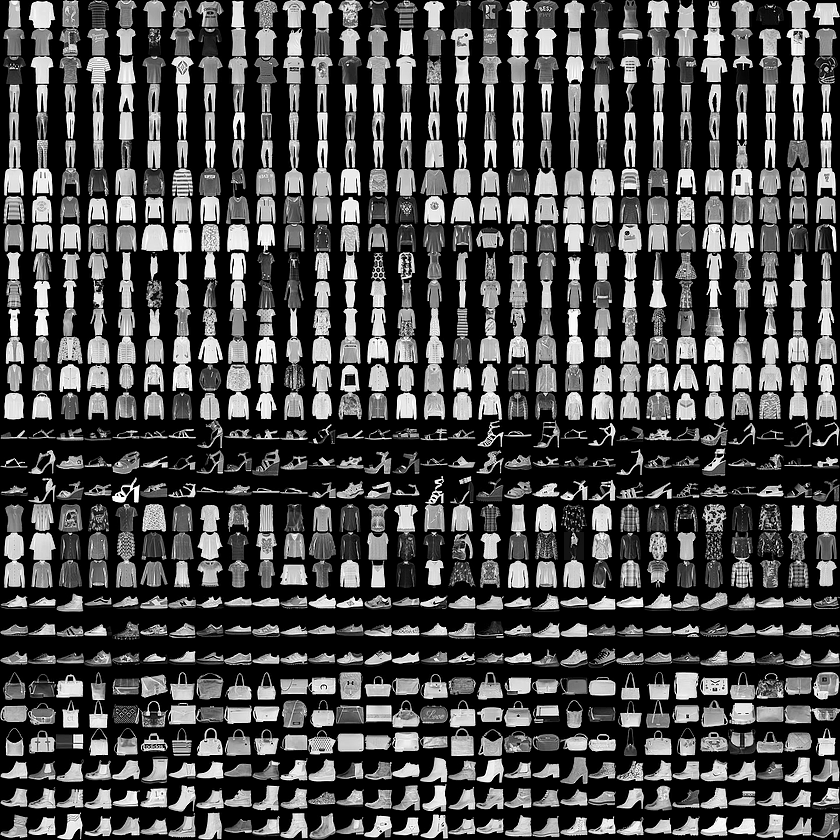\n\n\n- **Kuzushiji-MNIST** ([Link](https://github.com/rois-codh/kmnist))\n\n> Kuzushiji-MNIST is a drop-in replacement for the MNIST dataset (28x28 grayscale, 70,000 images), provided in the original MNIST format as well as a NumPy format. Since MNIST restricts us to 10 classes, we chose one character to represent each of the 10 rows of Hiragana when creating Kuzushiji-MNIST.\n\n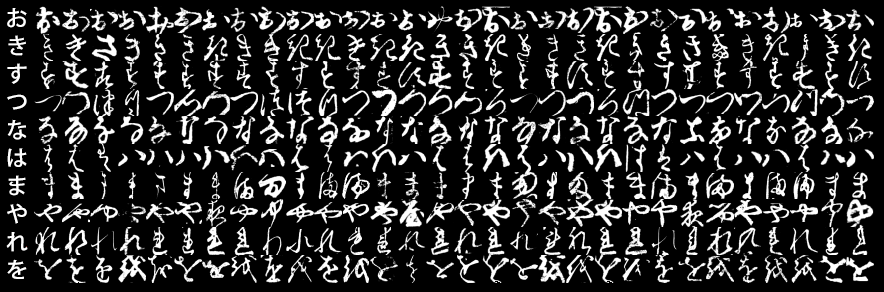\n\n\n- **EMNIST** ([Link](http://greg-cohen.com/datasets/emnist/featured.png))\n\n> The EMNIST dataset is a set of handwritten character digits derived from the [NIST Special Database 19](https://www.nist.gov/srd/nist-special-database-19) and converted to a 28x28 pixel image format and dataset structure that directly matches the [MNIST dataset](http://yann.lecun.com/exdb/mnist/). Further information on the dataset contents and conversion process can be found in the paper available at [https://arxiv.org/abs/1702.05373v1](https://arxiv.org/abs/1702.05373v1).\n\n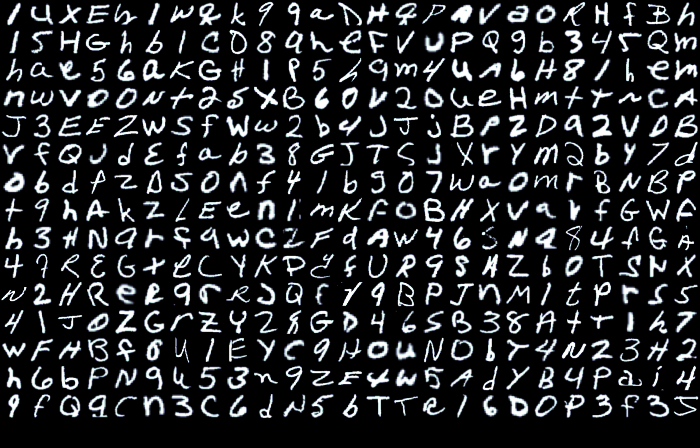\n\n\n- **QMNIST** ([Link](https://github.com/facebookresearch/qmnist))\n\n> The exact preprocessing steps used to construct the MNIST dataset have long been lost. This leaves us with no reliable way to associate its characters with the ID of the writer and little hope to recover the full MNIST testing set that had 60K images but was never released. The official MNIST testing set only contains 10K randomly sampled images and is often considered too small to provide meaninful confidence intervals. The QMNIST dataset was generated from the original data found in the NIST Special Database 19 with the goal to match the MNIST preprocessing as closely as possible.\n\n\n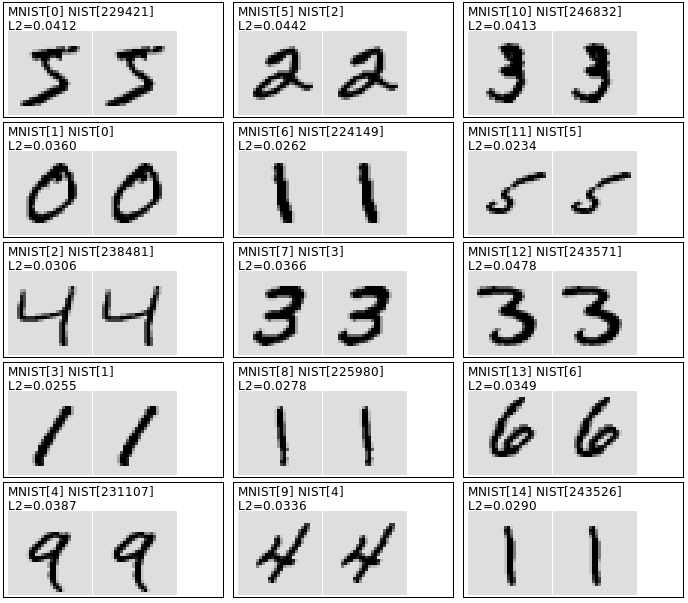\n\n\n\n- **Chinese MNIST** ([Link](https://www.kaggle.com/gpreda/chinese-mnist))\n\n> The Chinese MNIST dataset uses data collected in the frame of [a project at Newcastle University](https://data.ncl.ac.uk/articles/dataset/Handwritten_Chinese_Numbers/10280831/1). One hundred Chinese nationals took part in data collection. Each participant wrote with a standard black ink pen all 15 numbers in a table with 15 designated regions drawn on a white A4 paper. This process was repeated 10 times with each participant. Each sheet was scanned at the resolution of 300x300 pixels. It resulted a dataset of 15000 images, each representing one character from a set of 15 characters (grouped in samples, grouped in suites, with 10 samples/volunteer and 100 volunteers).\n\n\n\nDo not forget to upvote this work if you think that it is worthwhile. This motivates me to do more interesting topics that could make some impact on your knowledge!\n\nFeel free to comment if you liked it! Finally, I want to know if you have ever used an MNIST-like dataset like those mentioned above?\n\n\n**Credits**\n\n- https://github.com/zalandoresearch/fashion-mnist\n- https://github.com/rois-codh/kmnist\n- https://www.nist.gov/itl/products-and-services/emnist-dataset\n- https://arxiv.org/pdf/1702.05373v1.pdf\n- https://www.kaggle.com/gpreda/chinese-mnist\n- https://data.ncl.ac.uk/articles/dataset/Handwritten_Chinese_Numbers/10280831/1\n", "1241685": "Thanks for sharing 👍", "1248929": "Great topic. Thank you for maintaining this information, it is very useful for someone that wants to try his approach to MNIST on other similar datasets as well.", "1241990": "@rapela Thank you so much Heitor . I am looking for simpler datasets similar to MNIST to teach data science for school students . You can also include chinese MNIST dataset which is available in Kaggle" } }