This is a randomly generated image dataset containing 5K square images with a single regular polygon each. The procedure to create this dataset can be found in the Data tab.
\n", "isPublished": false, "hasIsPublished": false, "postTitle": "", "hasPostTitle": false, "mimeType": "", "hasMimeType": false }, { "name": "Evaluation", "content": "Submissions are evaluated using categorization accuracy. Each image has been labeled with one true class. For each image, you must submit a set of the predicted labels.
\n\nBefore we delve into the details of each of the accuracy score, it is important to cover the four building blocks used to define the evaluation metrics:
\n\n- True Positive (TP) – Actual label is positive and prediction is also positive\n- True Negative (TN) – Actual label is negative and prediction is also negative\n- False Positive (FP) – Actual label is negative but prediction is positive\n- False Negative (FN) – Actual label is positive but prediction is negative\n\n\n\nAccuracy is the most basic version of evaluation metrics. It is calculated as the ratio of correct predictions (TP + TN) over all the predictions made (TP + TN + FP + FN).
\n\n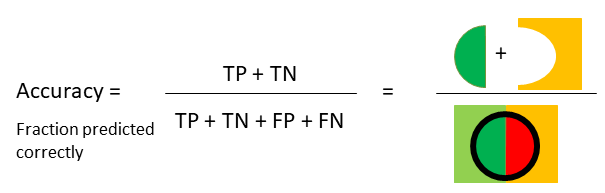\n\nThe order of the rows does not matter. The file must have a header and should look like the following:
\n\nid,classes\n1.jpg, pentagon\n2.jpg, triangle\n3.jpg, triangle\n...\n\n", "isPublished": false, "hasIsPublished": false, "postTitle": "", "hasPostTitle": false, "mimeType": "", "hasMimeType": false }, { "name": "abstract", "content": "## Final Exam : Image Classification\n|**Day-Time**\t | **Item** |\n| --- | --- |\n| Tuesday 2 December 2025 at 10:30 AM| Open | |\n| Tuesday 2 December 2025 at 12:00 AM| Close | |\n\n\n## Member\n\nThis competition is an individual format. All competitors must join the competition first.\n\n## Leaderboards\n\nEach group is allowed to send results 6 times per day. The score will be displayed into 2 parts:\n- 50 percents of dataset will be displayed in the Public Leaderboard where the contestants can check their scores at any time.\n- 50 percents of dataset will be stored and displayed in the Private Leaderboard which will be used to calculate the score to determine the result of the competition. The results will be displayed after the competition is over.\n\n\n## Evaluation Metric\nMetric: Categorization Accuracy\n\n## Submission\nTo submit the results, the test set should be predicted class result and collected into \".CSV\" file as shown in the example file \"sample_submission.csv\", otherwise Kaggle will not be able to calculate submission score.", "isPublished": false, "hasIsPublished": false, "postTitle": "", "hasPostTitle": false, "mimeType": "", "hasMimeType": false } ] }