{
"id": 348399,
"title": "6th place solution",
"content": "First of all, thank you to everyone who organized the competition.
\nThe competition was ended over a month ago, I share my solution.
\nThis competition's task and data were interesting, but I regretted about the leakage.
\n1. Preprocessing
\n
\n\n- Remove symbols that seem to be noise.
\n- About zip and phone, leave only numbers.
\n- Apply pykakasi to JP and unidecode to all data.
\n
\n2. Candidate Generation
\n
\n\n- Generate 28 candidates per id, IoU=0.978.
\n- Dataset Creation Process
\n- Split the data into two parts by poi.
\n- Create candidates and features for each data.
\n- Change seed and split the data multiple times.
\n- Combine them to form a dataset.
\n
\nPhase1
\n\n- Extract 6500 points for each point by coordinates, using kdtree.
\n
\nPhase2
\n\n- Calculate the similarity with each point, and select top28 as a candidate by the following weighted sum.
\n- square root of the coordinate distance
\n- 1 - jarowinkler: name, categories
\n- normalized levenshtein: name, categories
\n- 1 - simpson: name splited by ' ', categories splited by ', '
\n
\n3. Matching Prediction
\n
\nFeature
\n\n- coordinate distance rank of kdtree
\n- language identification from name
\n- using top3 labels and probs
\n- coordinate distance
\n- haversine, chebyshev, euclidean, manhattan
\n- similarity of the categorical feature
\n- LCS(Subsequence/Substring), levenshtein, jarowinkler
\n- About categories splited by ', ', use similarity, calculated on a brute force basis, mean, min and max.
\n- string length of categorical features
\n- features about sets based on string and word
\n- count encoding
\n- coordinate, name, address, url, phone
\n- tf-idf
\n- rank features about frequency of occurrence
\n- country, categories, categories splited by ', ', categories splited by ' '(word)
\n- Except country, labeling in both of ascending and descending order.
\n- Labels less than 1% are to be removed.
\n- rank features for each candidate
\n- Create a rank of between 28 candidates per id for each feature.
\n
\nModel
\n\n- catboost, single model
\n- remove early stopping & increase iterations (overfit)
\n- train on all data
\n
\n4. Postprocessing
\n
\n\n- graph probability convolution\n

\n- ex) Updating the prob of the connection from A to B (red line).
\n- Extract A's candidates that have B as a candidate.
\n- Limit to connections having 0.5 or more prob to A.
\n- Calcurate a weighted average of the probs of the connection with B, using the probs of the connection with A as the weight.
\n- AB’
\n = (AC * CB + AD * DB + AA * AB) / (AC + AD + AA)
\n = (0.7 * 0.7 + 0.9 * 0.1 + 1 * 0.6) / (0.7 + 0.9 + 1)
\n = 0.45
\n- Add nodes that are connected with a prob of 0.5 or more at the adjacent nodes to the prediction.
\n
\n5. Other Tips
\n
\n\n- Build with dict and numpy basically.
\n- Batch processing of feature creation and prediction to avoid memory errors.
\n- Parallel processing of the candidate generation with 4 cpu at submission.
\n- Convert id dtype from str to int.
\n
",
"comments": [],
"comment_count": 0,
"messages": [
{
"id": 1916913,
"postDate": "2022-08-28T09:13:35.207Z",
"content": "First of all, thank you to everyone who organized the competition.
\nThe competition was ended over a month ago, I share my solution.
\nThis competition's task and data were interesting, but I regretted about the leakage.
\n1. Preprocessing
\n
\n\n- Remove symbols that seem to be noise.
\n- About zip and phone, leave only numbers.
\n- Apply pykakasi to JP and unidecode to all data.
\n
\n2. Candidate Generation
\n
\n\n- Generate 28 candidates per id, IoU=0.978.
\n- Dataset Creation Process
\n- Split the data into two parts by poi.
\n- Create candidates and features for each data.
\n- Change seed and split the data multiple times.
\n- Combine them to form a dataset.
\n
\nPhase1
\n\n- Extract 6500 points for each point by coordinates, using kdtree.
\n
\nPhase2
\n\n- Calculate the similarity with each point, and select top28 as a candidate by the following weighted sum.
\n- square root of the coordinate distance
\n- 1 - jarowinkler: name, categories
\n- normalized levenshtein: name, categories
\n- 1 - simpson: name splited by ' ', categories splited by ', '
\n
\n3. Matching Prediction
\n
\nFeature
\n\n- coordinate distance rank of kdtree
\n- language identification from name
\n- using top3 labels and probs
\n- coordinate distance
\n- haversine, chebyshev, euclidean, manhattan
\n- similarity of the categorical feature
\n- LCS(Subsequence/Substring), levenshtein, jarowinkler
\n- About categories splited by ', ', use similarity, calculated on a brute force basis, mean, min and max.
\n- string length of categorical features
\n- features about sets based on string and word
\n- count encoding
\n- coordinate, name, address, url, phone
\n- tf-idf
\n- rank features about frequency of occurrence
\n- country, categories, categories splited by ', ', categories splited by ' '(word)
\n- Except country, labeling in both of ascending and descending order.
\n- Labels less than 1% are to be removed.
\n- rank features for each candidate
\n- Create a rank of between 28 candidates per id for each feature.
\n
\nModel
\n\n- catboost, single model
\n- remove early stopping & increase iterations (overfit)
\n- train on all data
\n
\n4. Postprocessing
\n
\n\n- graph probability convolution\n
\n- ex) Updating the prob of the connection from A to B (red line).
\n- Extract A's candidates that have B as a candidate.
\n- Limit to connections having 0.5 or more prob to A.
\n- Calcurate a weighted average of the probs of the connection with B, using the probs of the connection with A as the weight.
\n- AB’
\n = (AC * CB + AD * DB + AA * AB) / (AC + AD + AA)
\n = (0.7 * 0.7 + 0.9 * 0.1 + 1 * 0.6) / (0.7 + 0.9 + 1)
\n = 0.45
\n- Add nodes that are connected with a prob of 0.5 or more at the adjacent nodes to the prediction.
\n
\n5. Other Tips
\n
\n\n- Build with dict and numpy basically.
\n- Batch processing of feature creation and prediction to avoid memory errors.
\n- Parallel processing of the candidate generation with 4 cpu at submission.
\n- Convert id dtype from str to int.
\n
",
"rawMarkdown": "First of all, thank you to everyone who organized the competition.\nThe competition was ended over a month ago, I share my solution.\nThis competition's task and data were interesting, but I regretted about the leakage.\n\n# 1. Preprocessing\n\n---\n\n- Remove symbols that seem to be noise.\n - About zip and phone, leave only numbers.\n- Apply pykakasi to JP and unidecode to all data.\n\n# 2. Candidate Generation\n\n---\n\n- Generate 28 candidates per id, IoU=0.978.\n- Dataset Creation Process\n - Split the data into two parts by poi.\n - Create candidates and features for each data.\n - Change seed and split the data multiple times.\n - Combine them to form a dataset.\n\n#### Phase1\n- Extract 6500 points for each point by coordinates, using kdtree.\n\n#### Phase2\n- Calculate the similarity with each point, and select top28 as a candidate by the following weighted sum.\n - square root of the coordinate distance\n - 1 - jarowinkler: name, categories\n - normalized levenshtein: name, categories\n - 1 - simpson: name splited by ' ', categories splited by ', '\n\n# 3. Matching Prediction\n\n---\n\n#### Feature\n\n- coordinate distance rank of kdtree\n- language identification from name\n - using top3 labels and probs\n- coordinate distance\n - haversine, chebyshev, euclidean, manhattan\n- similarity of the categorical feature\n - LCS(Subsequence/Substring), levenshtein, jarowinkler\n - About categories splited by ', ', use similarity, calculated on a brute force basis, mean, min and max.\n- string length of categorical features\n- features about sets based on string and word\n - jaccard, dice, simpson\n- count encoding\n - coordinate, name, address, url, phone\n- tf-idf\n- rank features about frequency of occurrence\n - country, categories, categories splited by ', ', categories splited by ' '(word)\n - Except country, labeling in both of ascending and descending order.\n - Labels less than 1% are to be removed.\n- rank features for each candidate\n - Create a rank of between 28 candidates per id for each feature.\n\n#### Model\n\n- catboost, single model\n- remove early stopping & increase iterations (overfit)\n- train on all data\n\n# 4. Postprocessing\n\n---\n\n- graph probability convolution\n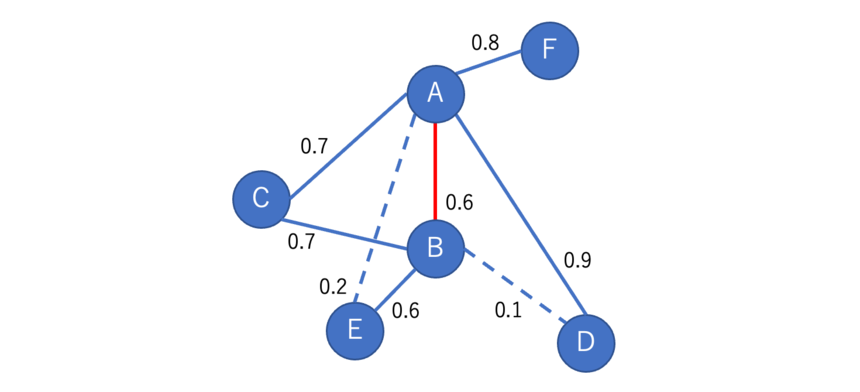\n - ex) Updating the prob of the connection from A to B (red line).\n - Extract A's candidates that have B as a candidate.\n - Limit to connections having 0.5 or more prob to A.\n - Calcurate a weighted average of the probs of the connection with B, using the probs of the connection with A as the weight.\n - AB’\n = (AC * CB + AD * DB + AA * AB) / (AC + AD + AA)\n = (0.7 * 0.7 + 0.9 * 0.1 + 1 * 0.6) / (0.7 + 0.9 + 1)\n = 0.45\n- Add nodes that are connected with a prob of 0.5 or more at the adjacent nodes to the prediction.\n - Repeat twice.\n\n# 5. Other Tips\n\n---\n\n- Build with dict and numpy basically.\n- Batch processing of feature creation and prediction to avoid memory errors.\n- Parallel processing of the candidate generation with 4 cpu at submission.\n- Convert id dtype from str to int.",
"votes": 7
}
],
"complete": true,
"source": "live",
"fetched_at": "2026-10-23T05:25:25Z",
"competition_id": 35476,
"competition_slug": "foursquare-location-matching",
"team_id": 8626025,
"solution_url": "/competitions/foursquare-location-matching/writeups/tomo20180402-6th-place-solution"
}